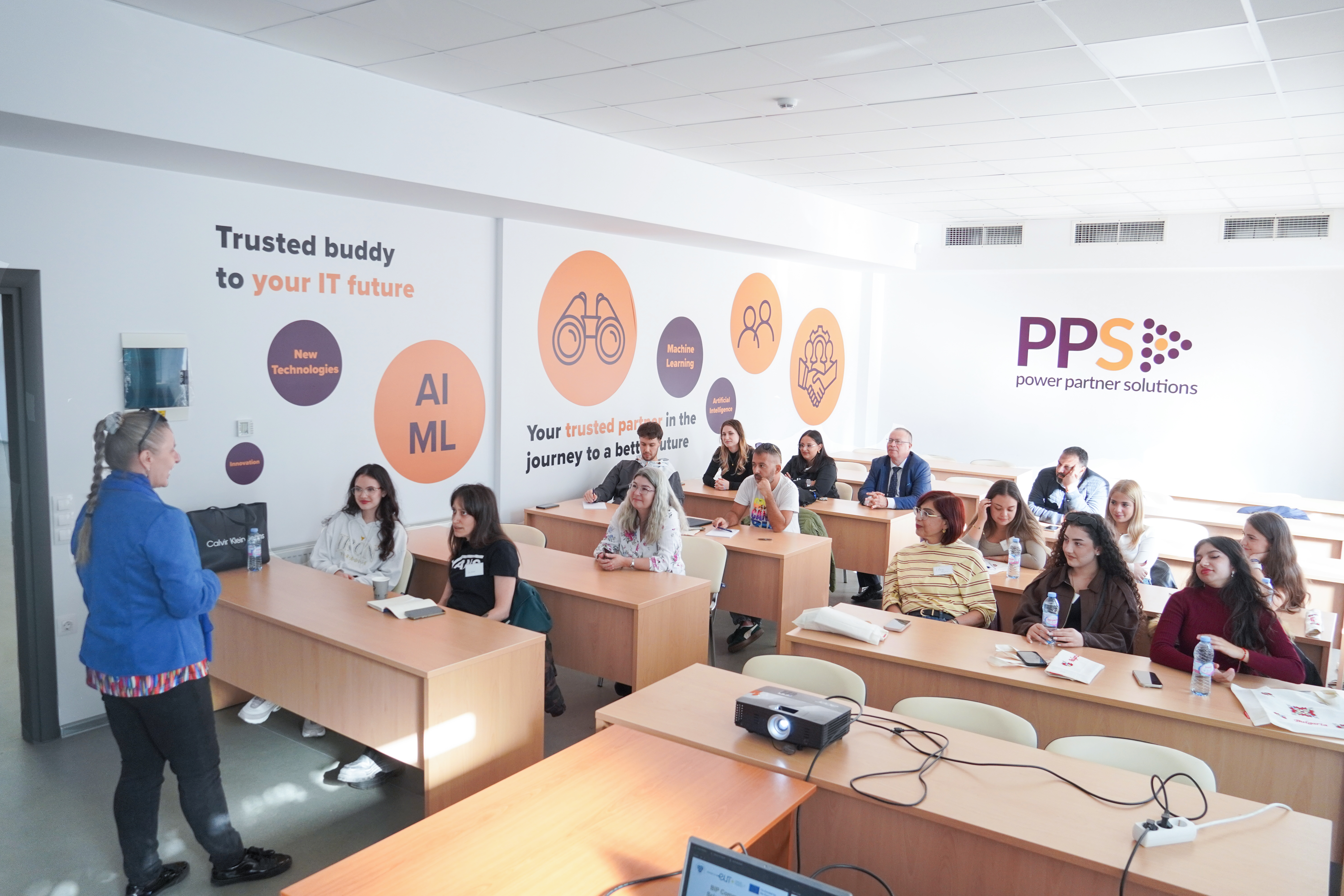
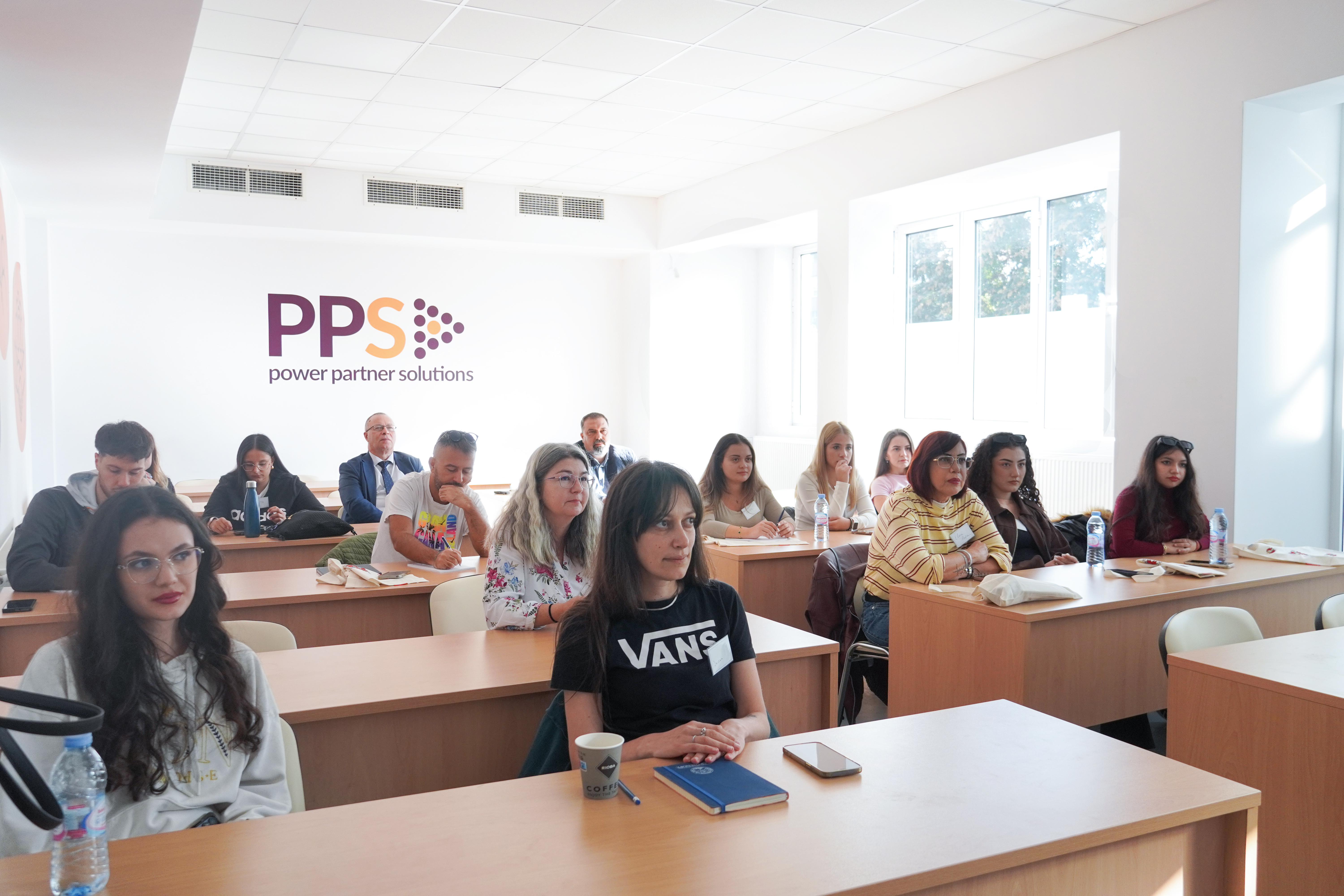
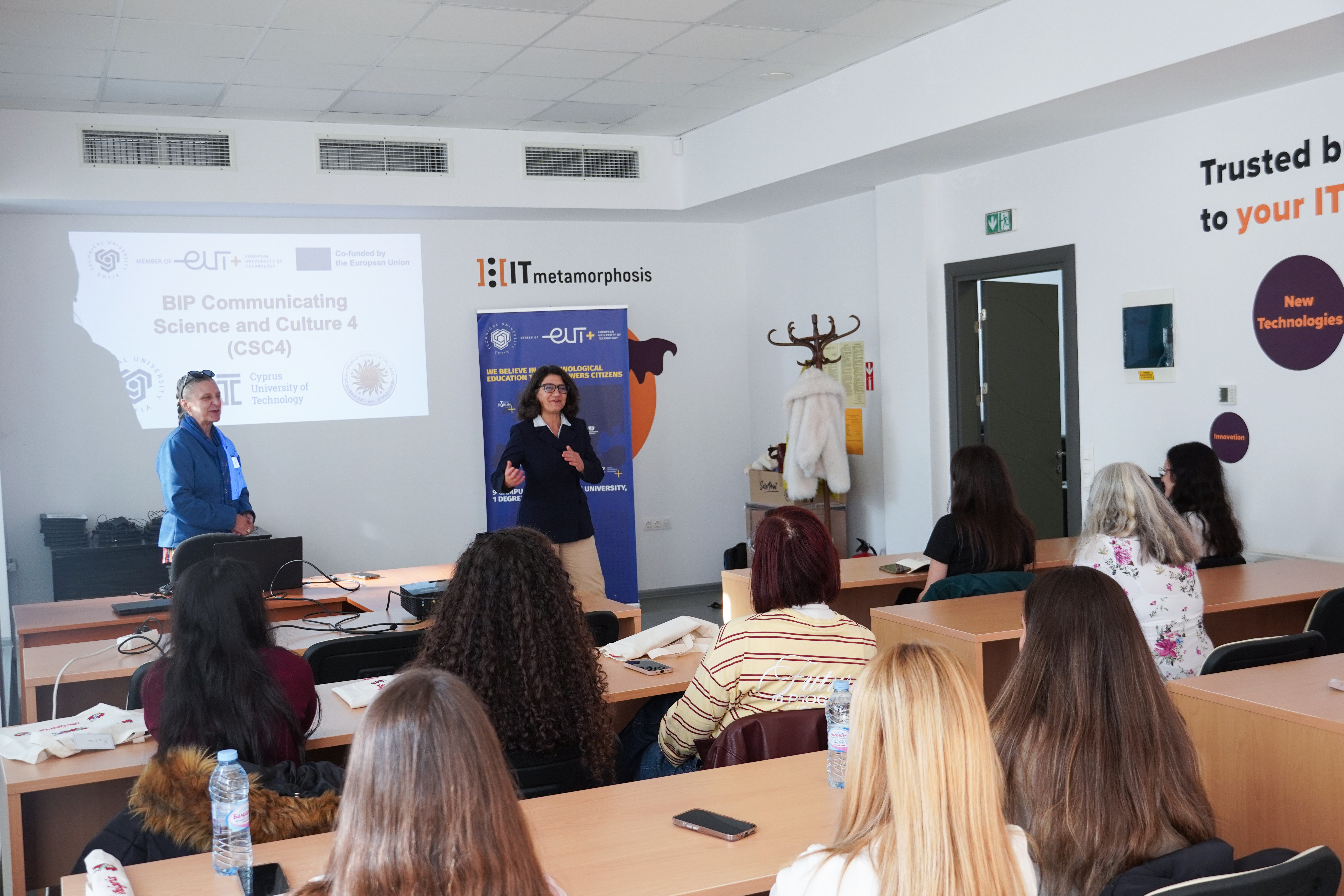
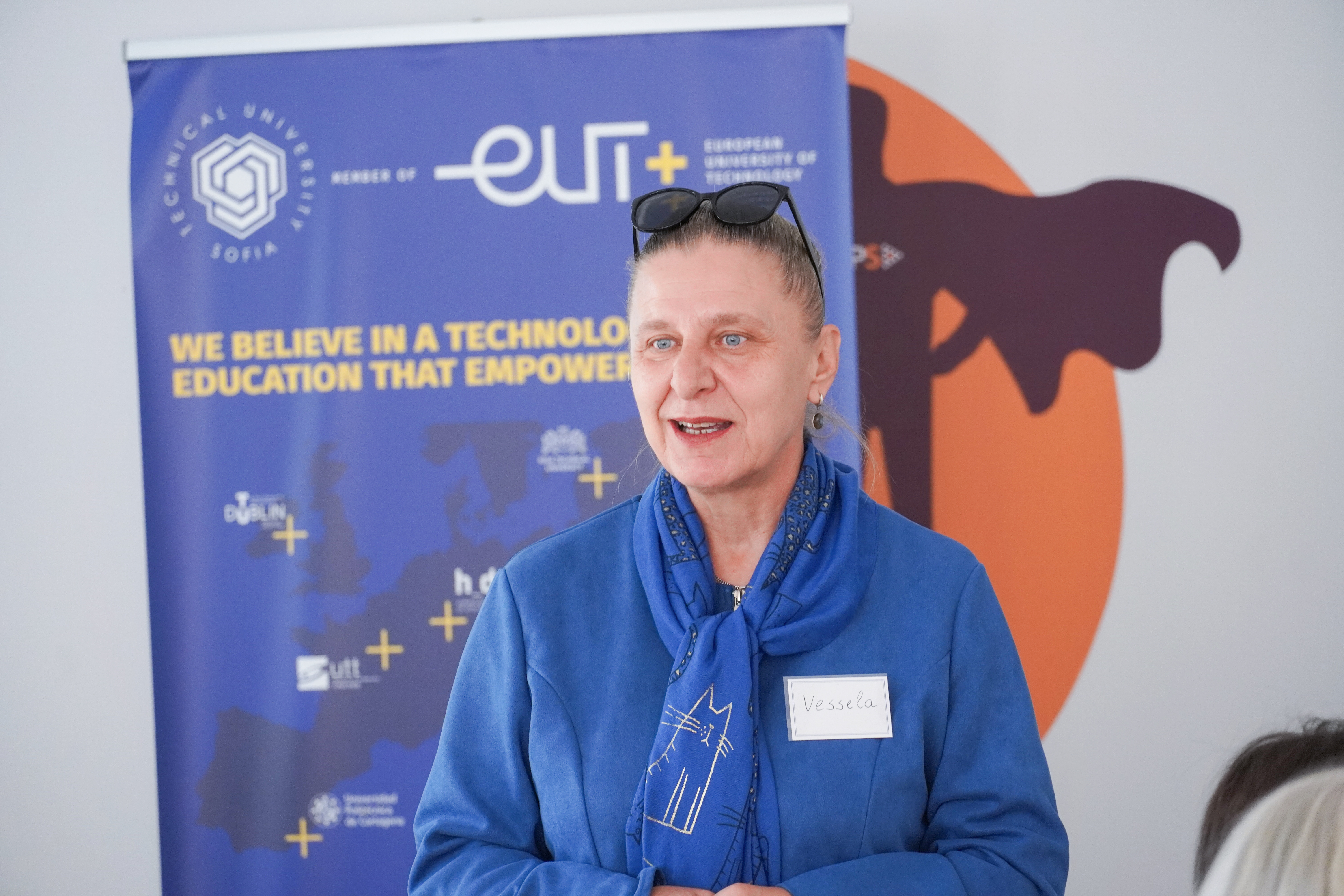
The Fourth Erasmus+ Blended Intensive Programme “Communicating Science and Culture” has begun
Share
Today, the fourth Erasmus+ Blended Intensive Programme “Communicating Science and Culture” has launched at Technical University of Sofia. The week-long event includes students from TU-Sofia and two partner universities from within the European University of Technology alliance (EUt+). Until October 2, young people from the University of Cassino and Southern Lazio (UNICAS) and the Cyprus University of Technology (CUT) will discuss topics related to the development of key language skills in intercultural communication and teamwork with their peers from TU-Sofia. Representatives of the Department of Foreign Languages and Applied Linguistics at Technical University of Sofia have prepared a busy curriculum featuring presentations on Bulgarian language and culture, sessions on non-verbal communication and intercultural teamwork, and introduction to the Italian language and culture, as well as to the Greek language and culture. One of the eagerly anticipated discussions is related to the use of artificial intelligence in education. Erasmus+ Blended Intensive Programmes are highly valued for the interaction and exchange of information between people with diverse cultural backgrounds, values, and social norms. Guests from Italy and Cyprus will have the opportunity to explore the sights of Sofia and visit some of the significant cultural and art sites. Representatives of the Department of Physical Education and Sports at TU-Sofia have organized a one-day trip to Vitosha Mountain, as well as various other attractive outdoor activities.
Prof. Dr. Eng. Lidia Galabova, Vice-Rector for International Affairs and Integration, welcomed the participants on behalf of the University’s senior officials. She pointed out that the “Communicating Science and Culture” Programme is not simply an event on the Erasmus+ calendar. The European program offers cooperation, creating close ties and friendships, getting to know the culture and traditions of the respective country, and learning new languages. Universities within the EUt+ alliance also create opportunities for academic cooperation and participation in numerous research projects, Prof. Galabova added, expressing hope that the participants would one day return to TU-Sofia as PhD candidates or researchers. This year, TU-Sofia marks a noteworthy milestone within the Alliance – the University assumes the EUt+ presidency. The handover took place in July, when TU-Sofia’s rector, Prof. Georgi Venkov, took the reins of the Alliance during the partners’ meeting in Dublin. This is recognition of the active role the oldest and largest Bulgarian higher technical school plays in building the European educational and research network.